Understanding Industrial Water Reuse
Industrial water reuse marks the transition from viewing water as a single-use utility to managing it as an engineered, circular resource. Rather than drawing purely from municipal or natural sources, passing it through a production line once, and discharging it to municipal sewer systems, facilities capture effluent, treat it to a specified standard, and redirect it back into operations.
This approach reduces municipal water demand and stabilizes operational resilience, but the complexity varies drastically depending on facility conditions. An automotive plant’s rinse water requires a completely different recapture strategy than a food processing facility’s utility water.
Closed-Loop vs. Partial-Reuse Approaches
System architecture generally falls into two categories:
- Closed-Loop Systems: Attempt zero liquid discharge (ZLD) or near-zero discharge. Water continuously cycles through treatment and reuse. While ideal theoretically, closed-loop designs are capital-intensive and require managing highly concentrated brine or sludge.
- Partial-Reuse Approaches: A pragmatic configuration where only specific streams are captured. For instance, redirecting mildly contaminated condensate into a cooling tower. This approach reduces overall usage without requiring extreme treatment thresholds for all water.
Primary Applications for Reclaimed Water
Cooling-Related Applications
Cooling towers and heat exchangers are among the most common destinations for reclaimed water. Because these systems evaporate massive volumes of water, they require constant make-up water. Reclaimed water directed here must be carefully treated for scaling minerals, corrosive agents, and biological contaminants to protect heat-transfer efficiency.
Process Water
Process water actually touches the manufactured product. Reusing water directly in the process stream demands the highest level of treatment. The chemical profile of the water must precisely match the manufacturing requirements to avoid compromising product quality. In many cases, process water requires reverse osmosis or advanced oxidation.
Washdown and Utility Applications
General facility cleaning, floor washdowns, and utility operations often have lower quality thresholds. This makes them excellent, low-risk candidates for recycled effluent, allowing facilities to offset fresh water usage without risking their primary production lines.
Stages of a Reclaimed Water System
A typical architectural setup involves several distinct physical stages built into the factory footprint:
- Collection: Intercepting wastewater at specific drains or process outputs before it merges with general sewage.
- Treatment: The mechanical, biological, or chemical processing stage (detailed in our Treatment Processes guide).
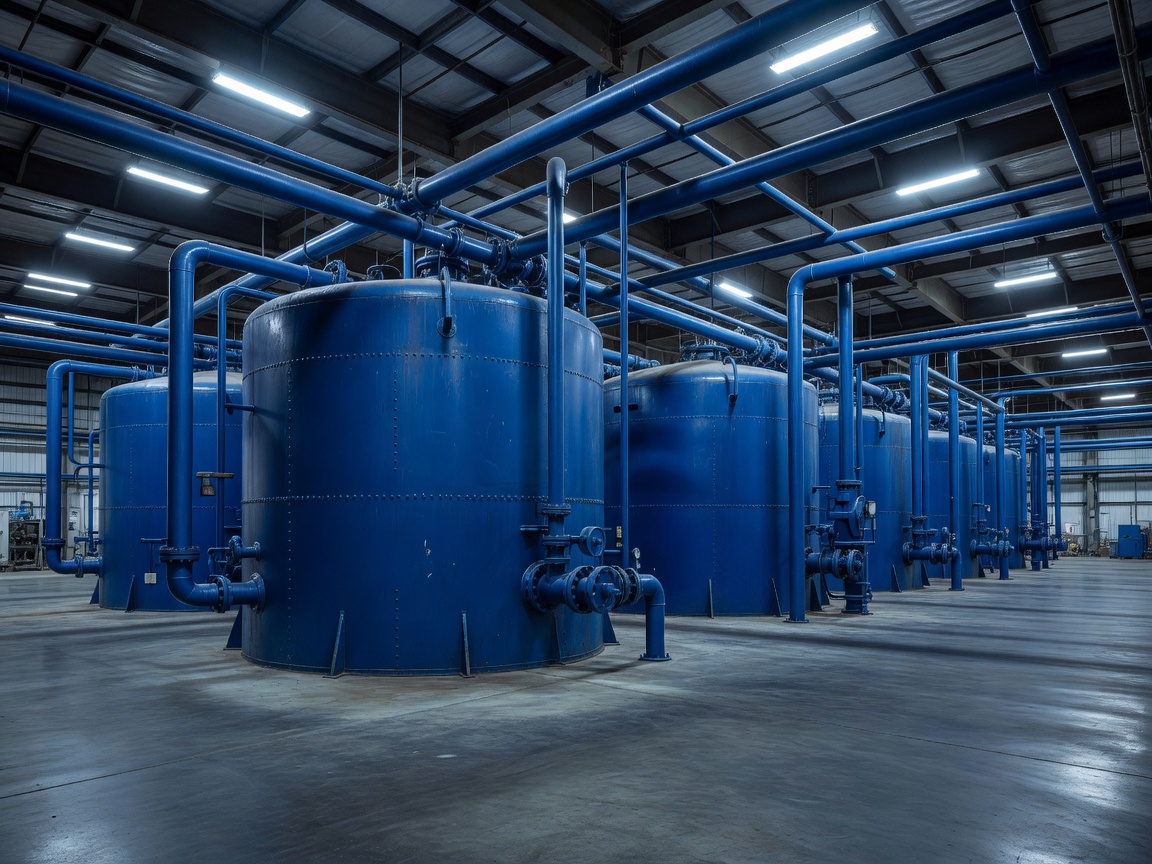
- Storage: Holding tanks that buffer the difference between when wastewater is generated and when reclaimed water is demanded.
- Distribution: A parallel pipe network (often color-coded purple for reclaimed water) pumping the treated resource to its destination.
What Facility Operators Should Evaluate
Before considering a system, operators must determine their baseline. What is the precise chemistry of the proposed source water? What are the flow rates during peak production vs. downtime? A system designed for continuous steady flow will fail if the facility operates in highly variable batch processes.
Advantages and Limitations
The primary advantage of these systems is securing long-term operational capability against water scarcity and volatile utility pricing. It provides physical control over a critical input.
However, the limitations must be acknowledged. These systems require physical floor space. They consume electricity (particularly high-pressure membrane systems), and they require dedicated operational maintenance. A poorly maintained system can become a liability, introducing biological fouling into factory equipment. Therefore, system design must balance the desired level of reuse with the facility's actual capacity to operate the required treatment infrastructure.