Designing a Treatment Train
Transforming industrial wastewater into a reusable resource requires a sequenced approach. No single technology removes all types of contamination efficiently. Instead, engineers design a "treatment train"—a series of stages where each unit process targets specific pollutants, protecting the downstream equipment from premature fouling.
It is vital to understand that treatment selection depends entirely on the source water chemistry and the intended reuse application. Avoid presenting one treatment method, such as Reverse Osmosis, as universally appropriate; in many cases, simpler mechanical filtration suffices and saves substantial energy.
Primary Mechanical Separation
The first line of defense is physical separation. Removing bulk solids prevents downstream pumps from clogging and sensors from being blinded.
- Screening: Rotary drum screens or static wedges capture large debris, plastics, and coarse particulate.
- Sedimentation and Clarification: Utilizing gravity to allow heavier suspended solids to settle to the bottom of a tank while clear water flows over a weir.
- Dissolved Air Flotation (DAF): Often used in food processing or petrochemicals, DAF introduces microscopic air bubbles that attach to oils, greases, and light suspended solids, floating them to the surface for skimming.
Biological Treatment (Where Applicable)
If the effluent contains high levels of dissolved organic matter (measured as BOD/COD), biological treatment may be necessary. This involves cultivating specific bacteria to consume the organics. Aerobic systems (requiring oxygen) and anaerobic systems (producing biogas) are common, often utilized in bioreactors or moving bed biofilm reactors (MBBR). Biological systems require careful monitoring of pH and temperature to keep the biomass healthy.
Advanced Filtration & Membrane Processes
For high-quality reuse, particularly process water, fine filtration is required.
- Media Filtration: Sand or mixed-media filters trap finer suspended solids.
- Ultrafiltration (UF): Low-pressure membrane filtration that provides a physical barrier to bacteria, viruses, and very fine particles. UF is frequently used as pretreatment for RO systems.
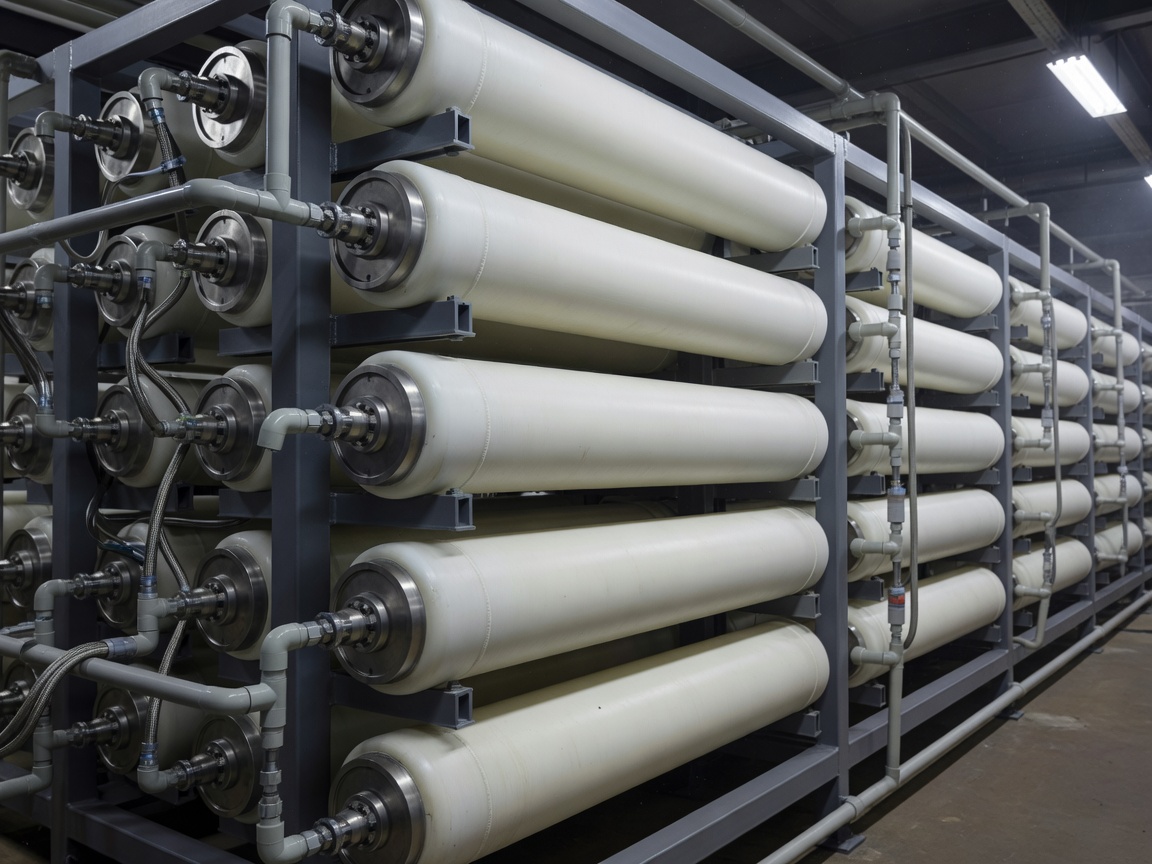
- Reverse Osmosis (RO): High-pressure membrane systems that separate dissolved salts, minerals, and complex molecules from the water. RO produces extremely pure permeate but generates a concentrated reject stream (brine) that must be managed.
Chemical Treatment & Sludge Handling
Many stages require chemical assistance. Coagulants and flocculants are added to help small particles clump together for easier settling or filtration. Additionally, the solids removed during these processes form sludge. Effective sludge handling—dewatering via centrifuges or filter presses—is a critical, often overlooked aspect of the treatment process that drastically affects operational costs.
Disinfection and Polishing Stages
Even highly filtered water can harbor microscopic pathogens or residual trace compounds that could affect manufacturing quality or pose health risks if aerosolized (e.g., in a cooling tower).
Disinfection typically involves dosing Sodium Hypochlorite (chlorine), or utilizing Ultraviolet (UV) light to neutralize microorganisms without adding chemicals. Ozone treatment serves as a powerful oxidant for both disinfection and breaking down complex organic molecules. Polishing stages might also include activated carbon vessels to strip out residual organics or chlorine before the water re-enters the factory floor.