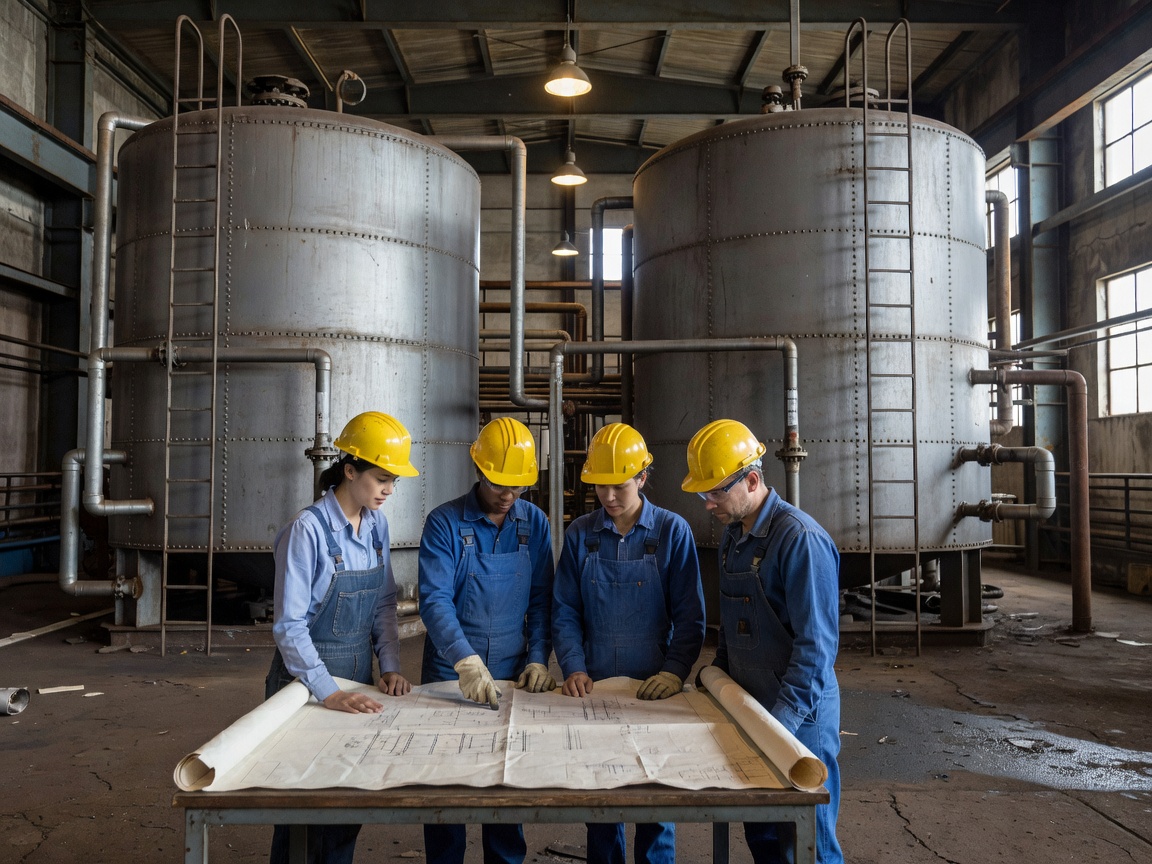
Starting with Facility Water Mapping
Integrating a water reuse system into a functioning industrial facility is rarely straightforward. Before any equipment is specified, a comprehensive facility water map must be drawn. This audit tracks every drop of water entering the plant, how it is used, its contaminant profile upon discharge, and where it exits.
Facility mapping separates assumptions from reality. It frequently reveals that estimated flow rates are inaccurate, or that distinct process lines are unnecessarily combined into a single, highly contaminated drain, complicating downstream treatment requirements.
Source-Water and Demand Analysis
Effective planning pairs identifying suitable source water with mapping internal demand:
- Source-Water Assessment: Which effluent streams offer the best balance of high volume and relatively low contamination? For example, intercepting clean boiler blowdown or RO reject water is vastly easier than treating mixed oily wastewater.
- Demand Analysis: Identifying suitable reuse points requires knowing the exact volume and quality required. Will the reclaimed water feed cooling towers, utility washdowns, or sensitive process equipment?
- Process Compatibility: The chemical profile of the treated water must be cross-referenced against the metallurgy of the existing infrastructure to avoid rapid corrosion or scaling.
Logistics of Storage and Distribution
Production and consumption rarely happen synchronously. A process line may discharge water in large batches, while a cooling tower demands a steady trickle. Integration planning must account for balancing tanks to store surges and provide continuous feed to the treatment plant.
Furthermore, running a parallel distribution network requires routing new pipework through existing factory racks. Safety considerations demand strict physical separation and visual coding (often purple pipes) to prevent cross-connection with potable water supplies.
Key Questions for the Facility Team
Before beginning a project, stakeholders should ask: Do we have the physical floor space for holding tanks? Are our operators trained to handle advanced membrane systems? What happens to the process line if the recycling system goes offline for emergency maintenance?
Commissioning and Operational Planning
Installation is only the physical halfway point. Commissioning—the phase where water is first introduced to the system—involves rigorous wet testing. Sensors must be calibrated, pump curves verified, and alarm conditions tested under safe, controlled scenarios.
Finally, operational planning involves translating the engineering schematics into standard operating procedures (SOPs). A successfully integrated system acts as a silent, reliable utility layer, tightly bound to the factory's primary production objectives.