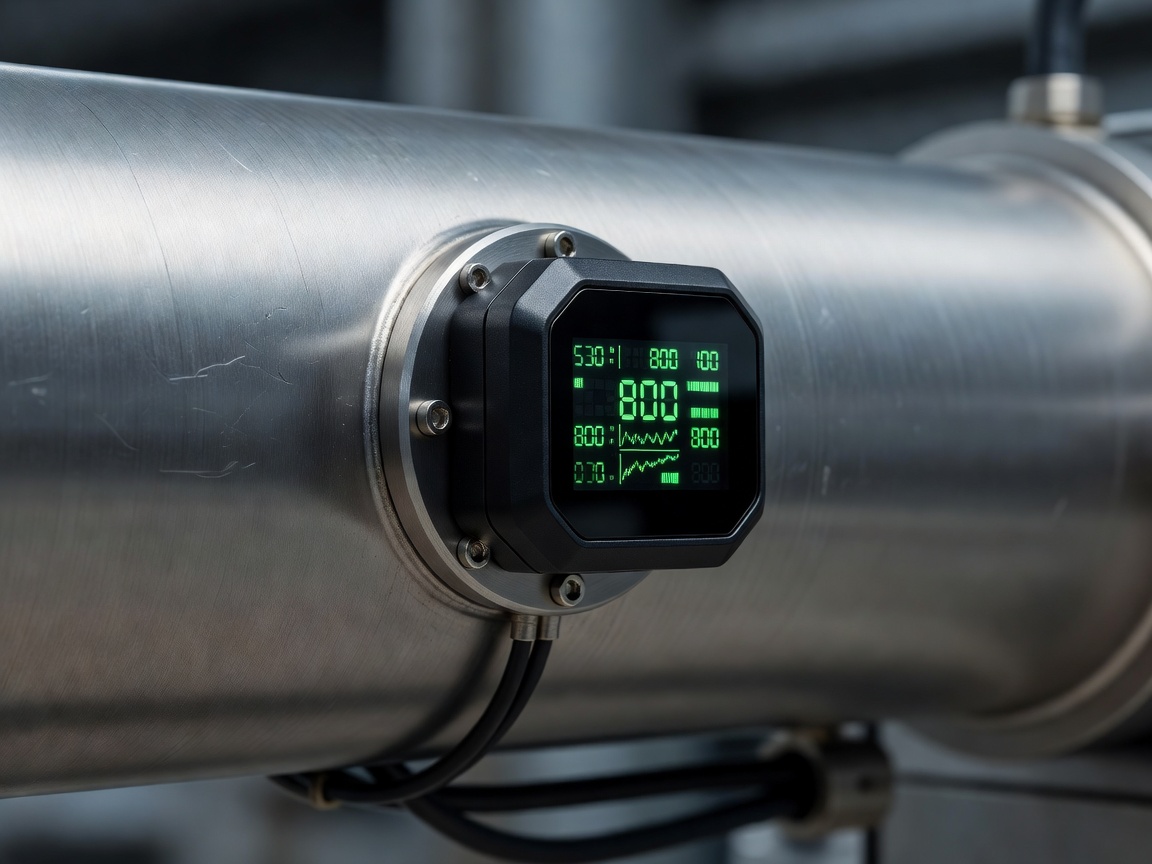
The Role of Continuous Monitoring
Without robust monitoring, an industrial water reuse system operates blindly. Factory environments are highly variable; sudden changes in production line outputs can drastically alter the chemistry or volume of effluent entering the treatment train. Continuous monitoring provides the visibility necessary to protect the treatment equipment and ensure the final water meets strict reuse specifications.
Monitoring frameworks generally tie into a facility’s existing Supervisory Control and Data Acquisition (SCADA) networks, turning mechanical flow into logged, actionable data.
Flow and System Diagnostics
Understanding volumetric movement is the foundation of operational awareness.
- Flow Monitoring: Magnetic or ultrasonic flow meters track water movement between stages. Monitoring can help identify unusual consumption or process changes, indicating potential leaks or inefficient manufacturing practices elsewhere in the factory.
- Tank Levels: Ultrasonic or hydrostatic level transmitters ensure balancing tanks neither run dry (risking pump cavitation) nor overflow.
- Pump Status: Amperage draws and vibration sensors on transfer and high-pressure pumps offer early warnings of mechanical wear or blockage before catastrophic failure occurs.
Water-Quality Monitoring
Inline sensors measure the chemical and physical state of the water in real-time. Key metrics include:
- Conductivity: Measures the water's ability to conduct electricity, acting as a proxy for total dissolved solids (TDS) and mineral content. Essential for protecting reverse osmosis membranes and assessing cooling water quality.
- Turbidity: Measures the cloudiness of the water. High turbidity indicates a failure in upstream filtration and poses an immediate threat to downstream UV disinfection efficiency.
- pH Levels: Tracks acidity or alkalinity. Sudden pH spikes can precipitate metals, damage pipework, or instantly kill biological treatment cultures.
- Temperature: Influences membrane flux rates and chemical reaction times. Monitored strictly in cooling loop discharges.
Alarm Conditions and Data Logging
A sensor is only as good as the logic connected to it. When quality metrics breach defined set-points, the control system must trigger alarm conditions. These might range from a warning light on an operator panel to automated diversion valves that send out-of-spec water to a holding tank rather than contaminating the clean reuse stream.
Trend Analysis and Preventive Maintenance
Beyond immediate alarm conditions, continuous data logging allows for long-term trend analysis. By examining conductivity trends over a month, operators can schedule membrane cleaning exactly when needed, rather than relying on an arbitrary calendar schedule.
Monitoring does not guarantee specific monetary savings; rather, it provides the engineering team with the empirical evidence needed to optimize dosing pumps, adjust backwash frequencies, and maintain continuous, safe factory operations.